Open Robotics Engine

Tyina

AI where it helps. Predictable logic where it matters.

Tyina is the open, transparent control engine for AI-driven robotics. AI handles perception and human interaction; a transparent, deterministic engine decides and acts, and enforces a safety floor the AI cannot override. Every decision stays readable. The black box is contained, not in charge — it can misread what it sees, but it can never take an unsafe action.

Learn more Get in touch

The architecture

How it works

Most robotics AI is one large model that perceives, decides, and acts as a single opaque system — powerful, but no one, not even its builders, can fully say why it did what it did. Tyina separates the jobs so each part is the right tool for its task, and the whole chain stays readable.

The same engine drives different bodies — a robotic arm today, a small utility vehicle as a direction — because the transparent, fail-safe brain is the product, not any one machine.

Tyina · the architecture

AI where it helps. Predictable logic where it matters.

Each part does one job — and the whole chain stays readable.

Perception
The eyes
AI vision recognises and locates the target. Decides what and where — powerful, and fallible.
AI
Reflex engine
The hands
Transparent, deterministic logic works out how to grip. No neural net, no black box.
Readable
Safety layer
The law
Fixed limits the AI cannot override. Clamps or refuses anything unsafe — with a reason.
Frozen
Explanation
The voice
Ask it why; it explains in plain words, bound strictly to what actually happened.
Auditable

The AI proposes and explains; it never overrides the safety layer.
A mistake by the AI can pick the wrong object — never take an unsafe action.

Tyina · two approaches

Most robot AI is a black box. Tyina is built to be read.

Different tools for different jobs — and a difference in what happens when something goes wrong.

The common approach
Learn it from data
TeachA human demonstrates the task many times
TrainThe examples are compressed into millions of tuned numbers
The model No readable logic inside
ActionAn action no one can fully explain if it goes wrong
Best for fine, fluid skills — folding cloth, delicate moves, where the feel can't be written down.
The cost: opaque — can't explain a decision, trace a mistake, or be audited.
The Tyina approach
Calculate it, in the open
Perception · eyesAI vision finds and names the target. What and where.
Engine · handsReadable, deterministic logic works out how to act — by geometry, not guesswork.
Safety · lawFixed limits the AI cannot override. Refuses, with a reason, rather than guess.
Action · explainedEvery move is traceable; ask it why and it tells you.
No training required. It reasons from an object's actual shape, so it can work with things it has never seen before — no demonstrations, no retraining for each new item.
Built for where humans can't easily step in — structured workspaces, agricultural and construction sites, and other places humans can't easily reach. When no one is there to catch a mistake, a machine that fails safe, refuses rather than guesses, and logs every decision is exactly what you want. The transparency isn't just nice to have — there, it's the point.

Most real-world tasks — moving, placing, loading, trenching — are rigid and repetitive, not delicate. You don't need a cloth-folding robot to move a box. For that work, transparent and predictable isn't the compromise — it's the better tool, and the only one you can audit. Tyina's perception is itself a neural network: the black box is contained, not in charge. It can misread what it sees — it can never take an unsafe action.

Status

Where we are

Tyina's perception and decision engine already works on real-world data. With a depth camera viewing a real, cluttered tabletop, you type or say the name of an object — and the system finds it, works out how to grip it, and explains its reasoning out loud. Ask for the onion and it locates the onion; ask for the watch and it finds the watch instead. When it can't grip something cleanly, it refuses and tells you why, rather than guessing. The grasp engine is a deliberately readable, classical method, chosen because every step can be inspected — it isn't the headline, it's the proof that transparent action works. The product is the control engine around it: a frozen safety floor, trust gates, and a readable record of every decision. Everything here runs today, in simulation and on the bench — none of it has driven a metre. We have now taken this same deterministic safety logic off the tabletop and applied it to vehicle navigation, proving the machine will physically halt if a person enters its path.

Every part is readable. AI vision provides the eyes; a transparent, deterministic engine works out the grip by geometry; fixed safety limits the AI cannot override; and a plain-language voice explains each decision and won't invent what it doesn't know. Nothing is a black box — every move can be audited.

The next step is a robot arm, to turn these grasp plans into physical picks. The groundwork for that is already built and tested in simulation, ready for the hardware. Follow along on the blog.

The reasoning

Why this way

Power where it helps — perception and human language. Determinism where it matters — action and safety. Transparency throughout. The AI proposes and explains; it never overrides the safety layer. A mistake by the AI can choose the wrong object, never take an unsafe action.

Looking ahead · a direction, not a live feature

Where we're heading — letting AI write code, without a black box

AI can propose code fast. Nothing it writes is trusted until it earns it — and it can never touch the safety law.

Gate 1 · Safety

Checked automatically

Checked automatically against the fixed safety limits. Anything unsafe is rejected here.

Gate 2 · Human

Read and approved

A person reads it and approves it. This can't be automated — the point is that a human has looked.

Gate 3 · Reality

Proven in the real world

Proven by a real-world test, not a simulation. Only then is the code trusted and locked in.

The AI proposes engine logic only. The safety law is frozen and human-only — the AI cannot edit it under any mode. The lock is on the engine's door; the safety layer has no door the AI can reach.

Proposed code is quarantined and visible — readable, recorded, reversible — until it passes all three gates. Anything that doesn't earn trust expires; it never quietly accumulates.

Where we're heading — the same engine, at heavy industrial scale.

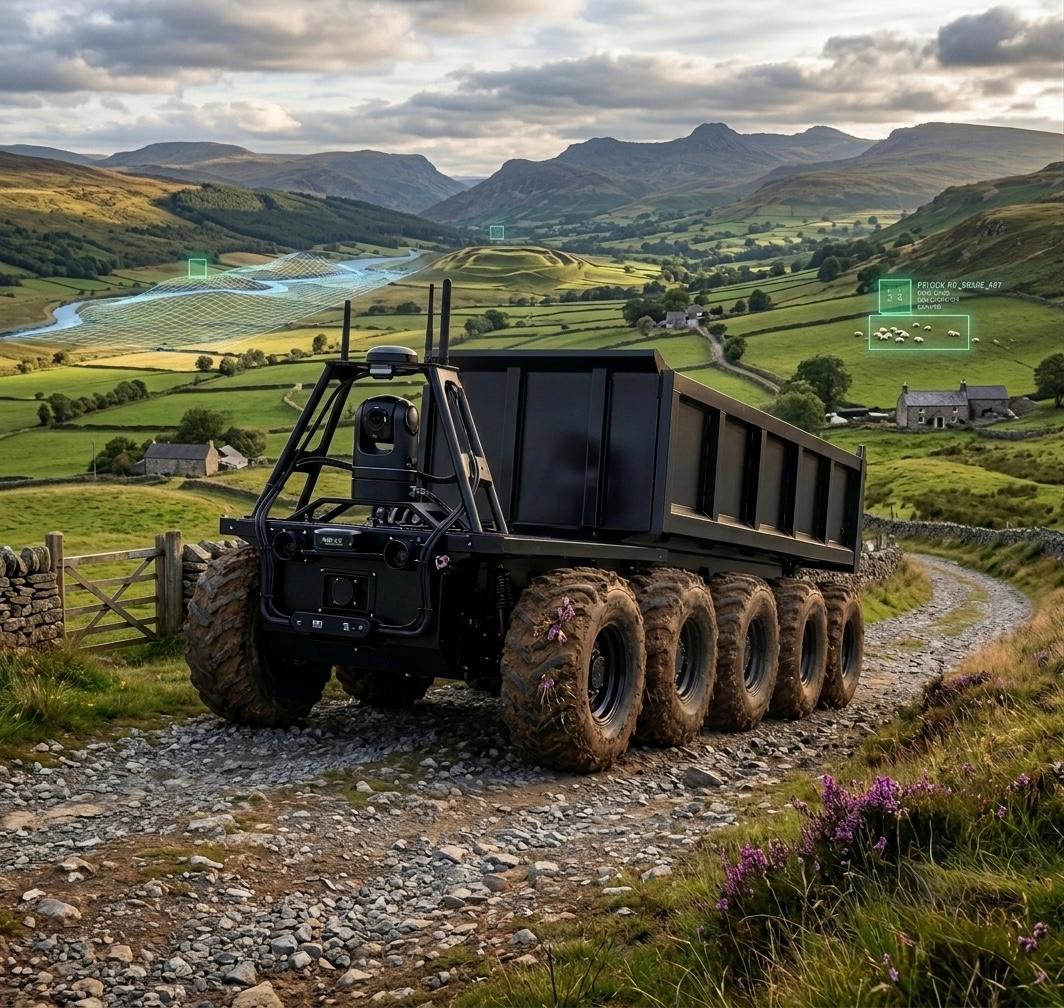
Tyina's heavy industrial vehicle platform operating outdoors.
  • Stage 1: The Proving Ground
    A scaled-down, off-the-shelf test platform. This is where Tyina’s architecture was proven in the real world, successfully gating rogue AI commands and physically halting for humans and obstacles in real-time.
  • Stage 2: The Field Prototype
    A larger, highly capable tracked vehicle utilising a pre-built industrial chassis. We integrate a custom forward sensor pod—equipping the machine with an RTK GPS, 3D LiDAR, multi-band cellular, and Iridium satellite ping for dead-zone reporting. It is governed entirely by the Tyina Engine.
  • Stage 3: Full-Scale Deployment
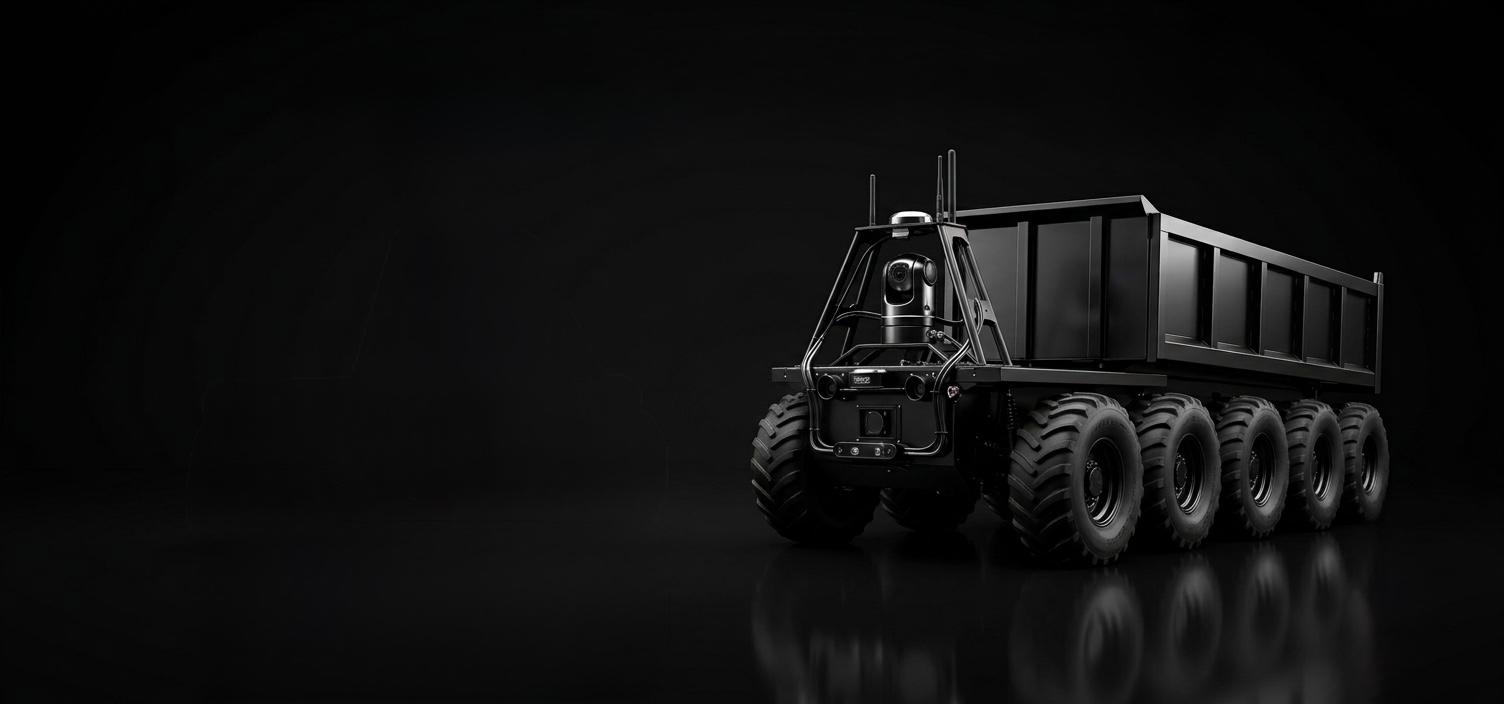
    A heavy, 8-wheel electric utility tipper. This is the full-scale variant of Stage 2. Using a heavy pre-built chassis with the same integrated sensor platform and Tyina Engine, it is designed to autonomously navigate and deliver payloads in complex, off-road environments (like farms and quarries) whilst operating under Tyina’s uncompromisable safety laws.

The reason this direction matters: a great deal of real work happens where the usual robots struggle — remote agricultural land, construction and estate sites, places with patchy signal and no tidy dataset, where there's rarely an engineer nearby to fix or retrain anything. Tyina's safety is calculated from what the sensors see, not learned from training data, so it's designed to work in places it has never seen, with no internet and nothing to retrain. GPS is treated as an optional failsafe only — useful if a signal happens to exist, relied upon for nothing.

This is a direction, proven so far in simulation and on the bench. The vehicle is the next stage after the arm. We show exactly where we are.
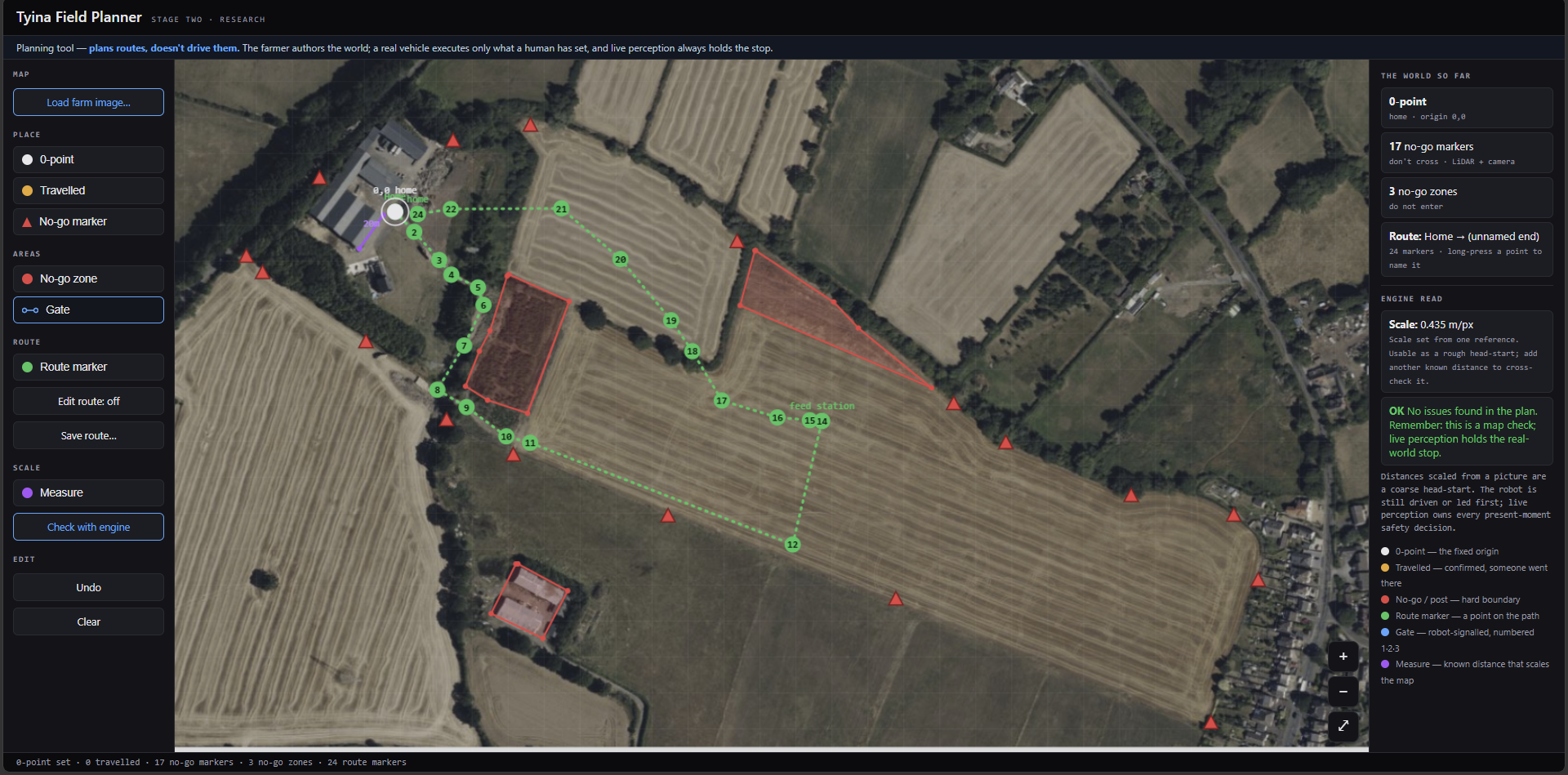
The Tyina field planner: a piece of land marked with home, a route, no-go areas and gates, checked against the engine.
The Tyina field planner — mark home, the route, the no-go areas, the gates. Every line is something you set and can read back; there's no hidden model deciding for you. A planning tool: the machine is still led and supervised, and its sensors hold every real-world stop.

We are not who you'd expect
to be building this.

Tyina was founded by Kevin Cooney. My background is in the creative industries — over twenty years working in visual effects, running my own business, leading creative teams on productions where complex systems had to work reliably under pressure.

I am not a software engineer. I did not study computer science. I built Tyina in my spare time, using AI-assisted development tools, driven by an obsession with a problem I couldn't stop thinking about.

What if the AI fails anyway? What sits between the AI and the physical world when it gets it wrong?

I think the answer is architectural, not algorithmic. The safety layer cannot live inside the AI because the AI is the thing that fails. It has to live outside — in something deterministic, simple enough to be audited, something the AI cannot influence regardless of what it decides.

I've since gone deep on how others approach this — learned policies, behaviour trees, the robotics-safety standards — and chosen this path deliberately, not by default. That insight didn't come from a computer science textbook. It came from twenty years in an industry where complex systems fail in unpredictable ways and the consequences are expensive and visible. In visual effects, you build pipelines where a failure in one component cannot cascade into the failure of everything else. You learn to separate the creative decision layer from the technical execution layer. You learn that the most reliable systems are the simplest ones.

It turns out that principle applies to AI safety in physical systems rather well.

As AI moves into physical systems, being able to explain what a system did — and to rely on it failing safely — is becoming a requirement, commercially and through regulation like the EU AI Act. No open standard for AI-independent safety exists yet. That's the gap Tyina is built to fill: a safety layer that's open, auditable, and outside the AI's control. We're building toward that standard.

Building in robotics, teaching it, or want to follow along? Get in touch.

If you're building something that involves AI making physical decisions — talk to us.

Tyina is at an early stage — built and tested in simulation, heading for hardware. If you work in robotics, teach it, or want to help close the gap between AI and safe physical action, I'd like to hear from you — collaborators, the curious, and the patient especially.

We are not looking for people who need everything figured out before they engage. We are looking for people who see the gap and want to help close it.

LinkedIn

Kevin Cooney

Location

Derby, United Kingdom

Get in touch