How do you let an AI write code faster than a human can read it, without ending up with the unreadable tangle Tyina exists to avoid? Here’s the mechanism, and where it currently stands.
Tyina exists because most robotic intelligence is a black box. A neural network makes a decision, and not even its builders can point to why — the reasoning isn’t written anywhere readable; it’s spread across millions of tuned numbers. When it makes a strange mistake, there’s no line to fix, because there is no line. You retrain it and hope.
So Tyina keeps its decisions in readable, deterministic logic you can inspect.
But AI is useful for writing that logic. It can draft a solution to a fiddly problem far faster than a person can type one. The temptation is to let it write the engine’s code and move quickly.
That’s the trap. Build on top of code you never read, and you get a tower of logic no human has verified. Each line is readable in principle — but nobody read it. Readable-but-unread is its own black box. You’d have escaped the neural-network tangle only to build a new one out of unreviewed code.
The point is to keep the speed without losing the transparency. So Tyina has a mechanism for both.
Locked and unlocked
Tyina has two modes.
Locked is the operating mode. Only approved, tested code runs; the AI cannot introduce new logic. Once the engine is doing a real job, the code has earned its place and nothing rewrites it.
Unlocked is development mode. The AI can propose code, quickly — but everything it writes is logged and quarantined as provisional. It does not run as trusted logic, and nothing can be built on top of it until it has earned trust.
A neural network’s reasoning vanishes the instant it happens; it was never text, so you can’t go back and read it. Here, every line the AI writes is recorded as readable code, permanently. It may be written faster than a person can follow live, but you can always go back and read exactly what it wrote, and why. A fast process with a complete record.
How code earns trust: three gates
Provisional code becomes trusted only after passing three gates, in order:
- Safety. Checked automatically against Tyina’s fixed safety limits. Anything that could produce an unsafe action is rejected here.
- Human. A person reads it and approves it. This can’t be automated — the point is that a human has looked.
- Reality. It’s tried in the real world, and the real test passes. Not a simulation, not the system checking its own homework. The physical outcome confirms the code does what it claims.
Pass all three, and the code is locked in. Fail any, and it expires — discarded, never built upon. That last rule is what stops the tower of unreviewed code from forming: code that doesn’t earn trust doesn’t survive.
Where this stands
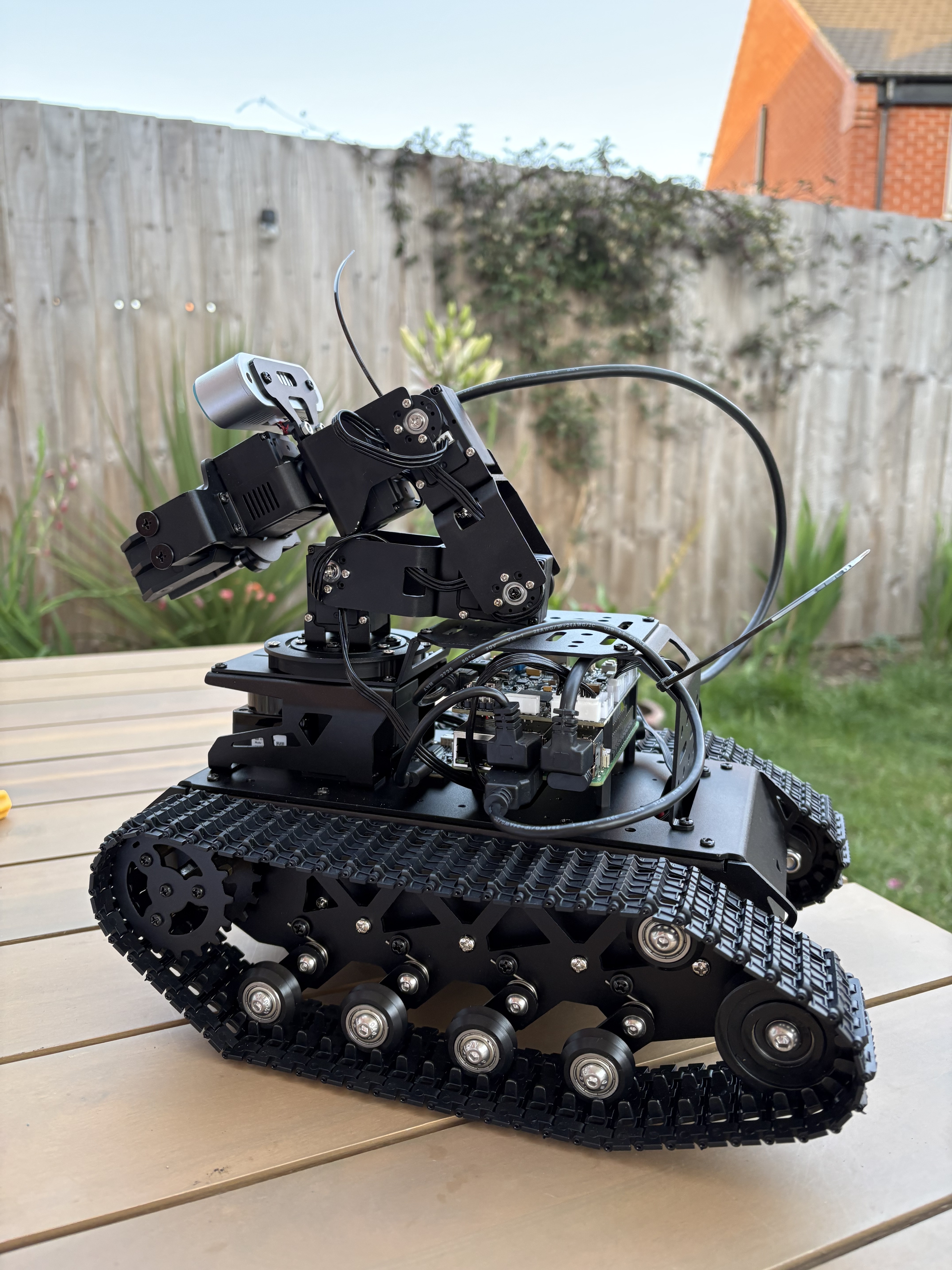
The third gate — reality — needs a real-world test: a robot arm attempting the action and succeeding. The arm is the next step, so that gate isn’t active yet. The mechanism is built and runs as designed, but until there’s a physical test to pass, it promotes nothing.
That’s deliberate. Promoting AI-written code on a simulated success would mean checking an invented result against an invented test. The mechanism waits for reality instead. When the arm is here, the gate has something real to check against — and code can earn its place.
Why this matters
The AI proposes; deterministic, inspectable logic decides; reality has the final say. The AI does the fast part — suggestions, first drafts — and none of it becomes load-bearing on trust alone.
The safety core sits outside all of this. The AI proposes engine logic only; the fixed safety limits are frozen and human-only. The lock is on the engine’s door — the safety layer has no door the AI can reach.